
Auto China 2026 wrapped up this weekend in Beijing, once again drawing global attention with a wave of new electric vehicle models and cutting-edge technologies. The biennial show has become a barometer for where the EV industry is headed — and increasingly, that direction is set in China rather than Detroit or Stuttgart.
Philipp Ibele, who spent several years leading Bosch's operations in China, offers a nuanced perspective on the dynamics between East and West. He argues that the sheer pace of Chinese EV development — from concept to showroom in timeframes that would be unthinkable in Europe — is something Western engineers and executives need to take seriously.
At the same time, Ibele does not see the relationship as one-sided. Global system integrators like Bosch bring something Chinese OEMs still value: deep expertise in safety-certified architectures, long product lifecycles, and compliance with diverse international regulatory frameworks. This cross-pollination is increasingly shaping how multinational suppliers position themselves.
The stakes are high for Europe. Electric vehicle sales growth has slowed in key EU markets, and legacy automakers are under pressure to accelerate software-defined vehicle strategies. Understanding how Chinese firms iterate so quickly — and selectively adopting those practices — could be critical to staying competitive both at home and in emerging markets.
Ibele's broader message is optimistic but urgent: the future belongs to those who can combine Chinese execution speed with globally validated engineering rigour. For Bosch, that means leveraging its dual presence rather than choosing sides in what is increasingly framed as a geopolitical industrial rivalry.
Jónapelem quote
Planning solar panels or home battery storage?
jonapelem.hu helps with complete solar, hybrid inverter and battery storage systems in Hungary, from planning to installation.
Source: “Combining Chinese speed with our global system expertise” – Philipp Ibele of Bosch - Electrive (EN)· Based on source, with AI-assisted rewriting.
Related articles
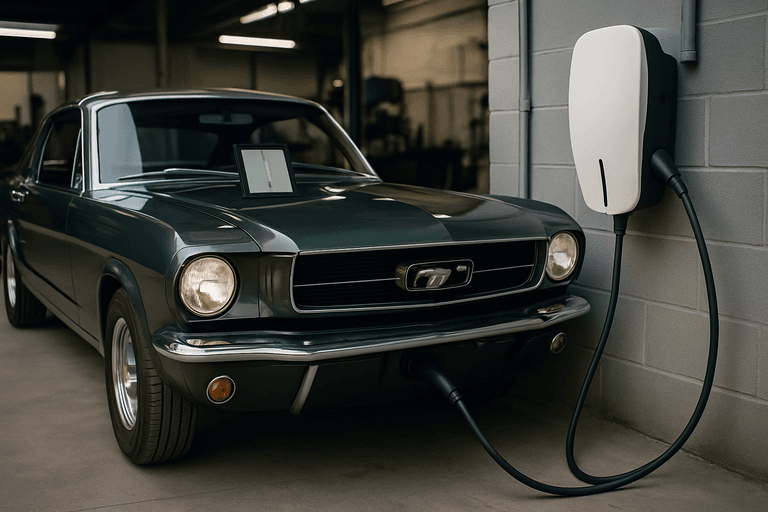
1966 Mustang reborn as a Tesla with working Full Self-Driving
A Sacramento-based Tesla parts shop owner spent $40,000 and two years converting a 1966 Ford Mustang into a fully functional Tesla — complete with FSD. It is likely the world's first non-Tesla vehicle to successfully run Tesla's Full Self-Driving system.
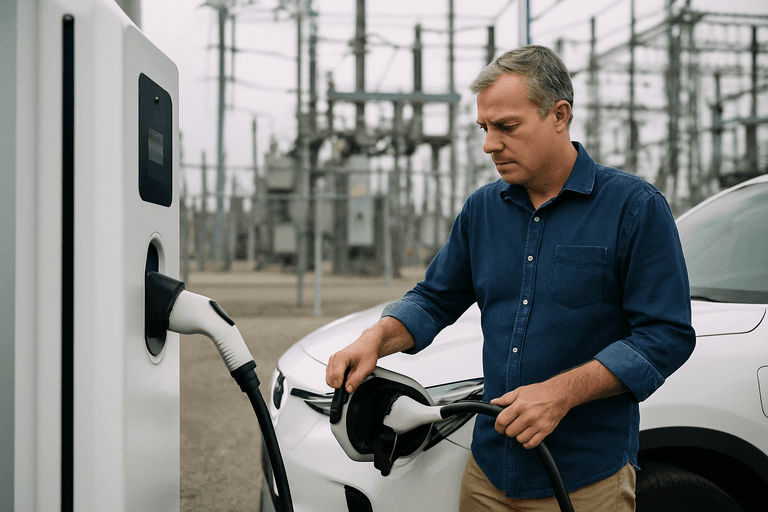
EVGrid Assist: US DOE maps EV impact on the power grid
The U.S. Department of Energy's EVGrid Assist program has released detailed charts and figures examining how the rise of electric vehicles is affecting electricity grids. As EV sales continue to climb globally, understanding grid capacity and smart charging needs has never been more critical.
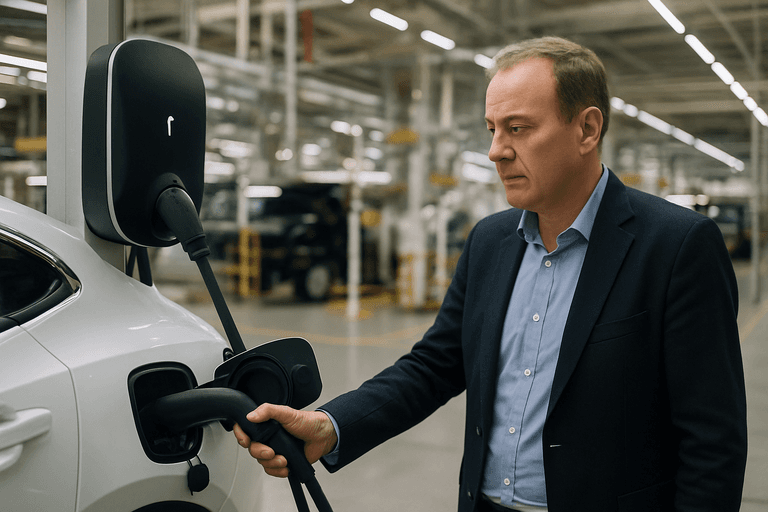
Bosch's Ibele: What Europe must learn from China's EV pace
Philipp Ibele, a former Bosch executive in China, argues that Western automakers and suppliers need to match China's electric vehicle development speed while leveraging their own systems engineering strengths. His insights come as Auto China 2026 wraps up with a wave of new EV innovations.
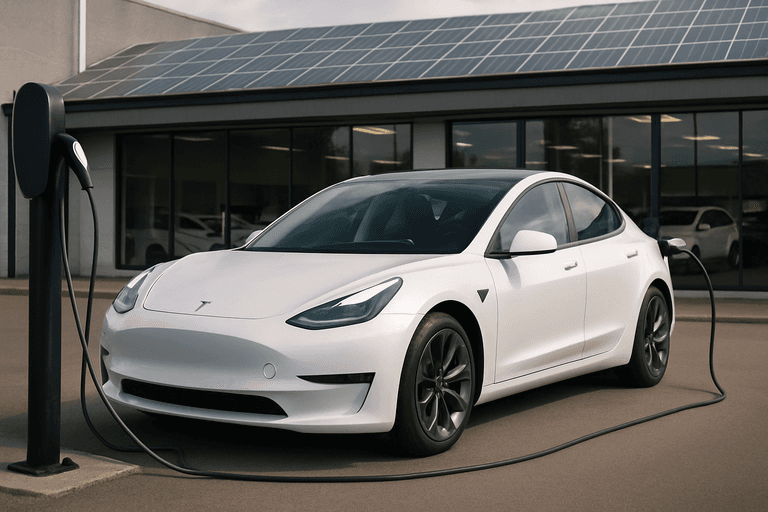
Tesla Model 3 RWD hits record-low $39,490 in Canada
Tesla has introduced a new Model 3 Premium RWD variant in Canada at a record-low CA$39,490 (~$29,000 USD), sourced from Giga Shanghai. It's the first time Tesla has sold China-made cars in Canada since the country imposed a 100% tariff on Chinese EVs in 2024.
Comments
0 commentsBe the first to comment.